
Why Can't You Sleep Well? 3 Feng Shui Misconceptions About Your Bedroom
Tossing and turning in bed until the early hours, feeling exhausted upon waking, and struggling with light sleep despite a regular sleep schedule—many attribute sleep problems to stress or constitution, ignoring the "hidden interference" in bedroom feng shui. Feng shui considers the bedroom a "place for nurturing qi," and the harmony of its energy field directly impacts sleep quality. However, the public's interpretation of bedroom feng shui often falls into dogmatic misconceptions, turning flexible environmental rules into rigid taboos, thus unwittingly disrupting the peaceful energy field needed for sleep. Below, from a feng shui perspective, we debunk three of the most common misconceptions to find the root causes of sleep disturbances.
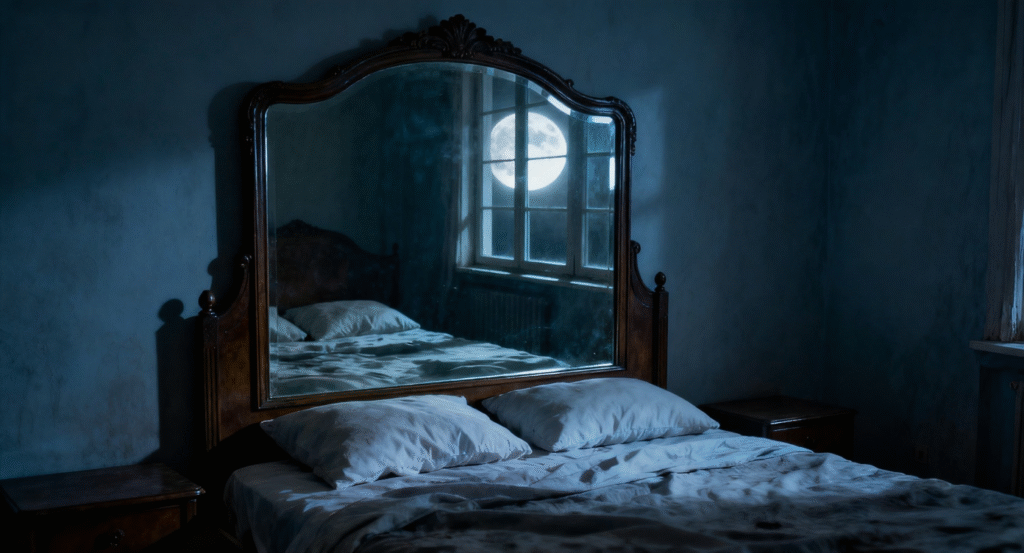
1. A mirror facing the bed is considered unlucky; mirrors should never be kept in the bedroom.
"A mirror facing the bed causes restlessness" is a widely circulated feng shui taboo for bedrooms, leading many to remove dressing table mirrors and wardrobe mirrors, yet still failing to improve their sleep. In reality, feng shui doesn't oppose mirrors themselves, but rather their destructive influence on the bedroom's energy field.
In feng shui, mirrors are considered "carriers of light afflictions," possessing the characteristics of both "reflecting energy" and "gathering yin energy." Bedrooms need to "retain and gather energy," but the strong reflectivity of mirrors disrupts the stable airflow within the room, causing the "protective energy field" that should surround the body to be repeatedly refracted and dissipated, leading to disordered energy flow during sleep, resulting in frequent dreams and awakenings. More importantly, at night in dim lighting, the reflections of people and objects in mirrors create "illusory image afflictions." In a semi-conscious state of "weak energy," a person is prone to misinterpreting these illusory images as foreign objects, triggering subconscious fear and directly disrupting the deep sleep cycle.
The key to resolving this problem: Mirrors are not inherently "inauspicious"; the key lies in "concealing" and "avoiding" them. You can choose a mirrored cabinet with doors, which can be closed to cover the area when not in use; or adjust the angle of the mirror so that its reflection avoids the bed area, preventing the energy from directly impacting the sleeping area. Feng Shui emphasizes "balancing practicality and energy flow," and properly arranged mirrors can actually reduce the feeling of clutter in the space and help the energy flow.
2. Placing green plants in the bedroom "depletes energy and attracts yin," even one plant is too many.
The belief that "green plants absorb yang energy and release yin energy at night, causing stagnant energy to accumulate in the bedroom" has led many to remove their carefully maintained plants from their bedrooms. However, feng shui's taboos regarding bedroom plants actually have strict prerequisites regarding "type and placement," rather than a complete ban.
Traditional feng shui considers the bedroom a "quiet place" that requires "retained yang energy." Large foliage plants, thorny plants (such as cacti), or moisture-loving plants (such as Monstera deliciosa) can indeed disrupt the yin-yang balance of the bedroom due to their "excessive yin and dampness" or "sharp energy field," easily generating "sleep-disturbing stagnant energy." However, small plants with round leaves that prefer dry conditions (such as pothos and snake plants) are considered "auspicious plants"—their round leaves can "gather and disperse energy," and their transpiration can regulate indoor humidity, contributing to a warm and stable energy field. The real taboos are "excessive placement" or "improper care": the "mold" energy caused by waterlogged flowerpots and the "dead energy" generated by piled-up dead leaves are the real culprits affecting sleep.
The key to breaking the deadlock: "Choosing the right plants" is more important than "completely banning them." Prioritize plants like pothos and snake plants, which are "low-energy-consuming and energy-gathering," and place them in well-ventilated areas such as windowsills, avoiding the bedside area. Regularly remove fallen leaves, control watering, and prevent mold growth. In this way, the plants can become "energy purifiers" rather than "carriers of negative energy."
3. The head of the bed must face north or south; facing west is considered an unlucky configuration.
The old saying, "A bed facing west brings illness and misfortune," leads many to force their beds to face certain directions, even when constrained by apartment layouts, only to find themselves finding it harder to fall asleep due to the awkward arrangement. The core of Feng Shui's requirements for bed orientation is "following the flow of Qi," not rigidly adhering to north-south directions.
Feng Shui, centered on the concept of "harmony between heaven and man," believes that bed orientation should align with the "Qi of the earth" and the "Qi of the human body." Since the Earth's magnetic field runs north-south, when the bed faces north or south, the human body's Qi can align with the earth's Qi, creating a stable "Qi connection" conducive to deep sleep. A bed facing west is considered taboo, not because "sunset is inauspicious," but because the west is easily affected by "metallic Qi"—the west is considered the "time of metal's strength" at sunset. If the bedroom's west-facing window is unobstructed, the afterglow of the setting sun and the westerly winds at night will continuously disturb the Qi at the bed's head, causing "unrefined Qi" during sleep. However, this is not absolute: if the west-facing window has thick blackout curtains and the headboard is against a solid wall (creating a "mountain-backed energy field"), one can sleep soundly facing west. The real taboo is having "no headboard" (suspended in mid-air or against a window), leading to "energy without support," causing restlessness.
The key to resolving: to follow the core principle of "backed against a solid wall, avoiding direct energy flow," rather than being fixated on the direction. If facing west is unavoidable, use blackout curtains to block the sunset and westerly winds; if the headboard cannot be against a wall, place a low cabinet or screen behind it to create a "virtual mountain-backed" energy field. The *Three Essentials of Yang House Feng Shui* emphasizes that "the bed is the master of sleep, and a solid backing is auspicious," indicating that direction is secondary, and a stable energy field is fundamental.
If you're after some solid 'kèo nhà cái 55', check out keonhacai55bet.com. I've had some good experiences there. Hit the link: kèo nhà cái 55 and good luck to us all eh!
Yo, just wanted to give a shoutout to PH Dream 88! Been having some decent luck lately. Easy to navigate site and a good selection of games. Give it a try! Check them out ph dream 88.
Tava na dúvida de jogo de ouro bet como sacar, mas achei as instruções bem claras no site. Sem mistério, o dinheiro caiu na conta rapidinho. Get those earnings quickly jogo de ouro bet como sacar.
For live cockfighting streams, đá gà trực tiếp cpc4 is where it's at. Good quality and reliable. Here's the place: đá gà trực tiếp cpc4
Okay, 369jllink, let's see what this is all about. I am curious to see what can I found in it! 369jllink
casinobigbola looks promising. Still checking it out, but the initial vibe is good. Find some fun at casinobigbola.
Gave winovamx a spin. It's alright! Nothing ground-breaking, but had a few good rounds. Worth a look to see if it's your style. winovamx
Just tried out futurola. Pretty solid! The selection is good and I had a fun time. Give it a whirl, might find something you like. futurola
Hey, I just checked out plataformawin222 and it's pretty cool. The layout is smooth and easy to navigate. Definitely worth a look if you're into online gaming. Check it out at plataformawin222!
Just tried out kuwingame11, and gotta say, not bad at all! The slots are pretty decent. Check it out kuwingame11 if you're looking for something new.
The jiliwinapplogin is super convenient. I can play my favourite slots on my phone during my breaks now.
Bookmarked the fb77705casinologin page for easy access. Don't want to waste any time getting to the games!
Anyone in Vietnam playing on 999betvn? What's the vibe like? Are the payouts smooth?
Hey guys, just stumbled upon 8qsbet the other day. Seems like a decent spot. Anyone else tried them out? Keen to hear your thoughts!
Fair go! Had a look at 8qbet88, interface seemed pretty outdated. On first impressions, it seems fine. Just don't love the user expierence. Check it here: 8qbet88
Comebet88 has a really solid reputation. Lots of my friends play here, and the feedback is always positive. I recommend giving it a whirl at comebet88